REPLACED’s Glitch Aesthetic: When the Simulation Knows It’s Broken (And Doesn’t Care) #
REPLACED treats its glitch aesthetic like a cigarette burn on velvet furniture — deliberately placed, perfectly imperfect, and somehow more honest than anything pristine could ever be. While most games hide their seams, REPLACED flaunts its digital decay like a badge of honor.
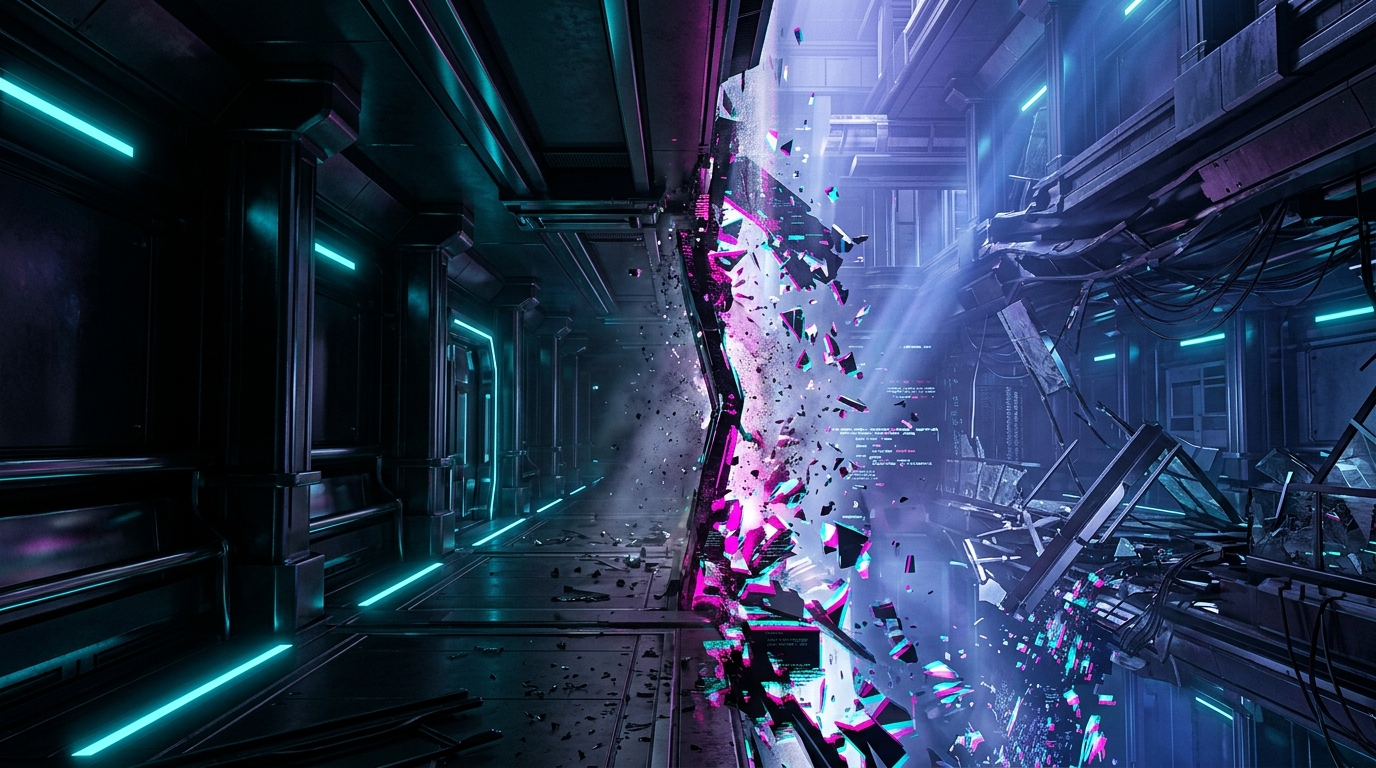
The pixel corruption isn’t just visual noise; it’s narrative architecture. When your character’s face dissolves into static mid-conversation, you’re not witnessing a bug — you’re experiencing the simulation’s acknowledgment of its own mortality. The glitches pulse with intent, each digital artifact carrying more emotional weight than most games’ entire cutscene libraries.
The Beauty of Broken Systems #
What separates REPLACED from typical cyberpunk posturing is its restraint. The glitch effects never overstay their welcome or devolve into seizure-inducing chaos. Instead, they breathe like old vacuum tubes warming up — predictable in their unpredictability. A character model might fragment just as they deliver crucial dialogue, forcing you to piece together meaning from corrupted data streams.
This isn’t the gentle melancholy I found in arcade games — it’s something sharper, more deliberate. REPLACED understands that true decay has rhythm, has purpose. The simulation doesn’t just break; it breaks beautifully.
Most games fear their own digital nature, desperately trying to convince you they’re real. REPLACED embraces the fact that it’s all just ones and zeros having an existential crisis — and somehow that makes it more genuine than anything trying to be human.