REPLACED’s Salvage Logic: What Happens When the Machine Learns to Question Its Own Parts #
REPLACED’s salvage system doesn’t just let you strip parts from broken androids—it forces you to witness a machine’s existential crisis in real-time, component by component.
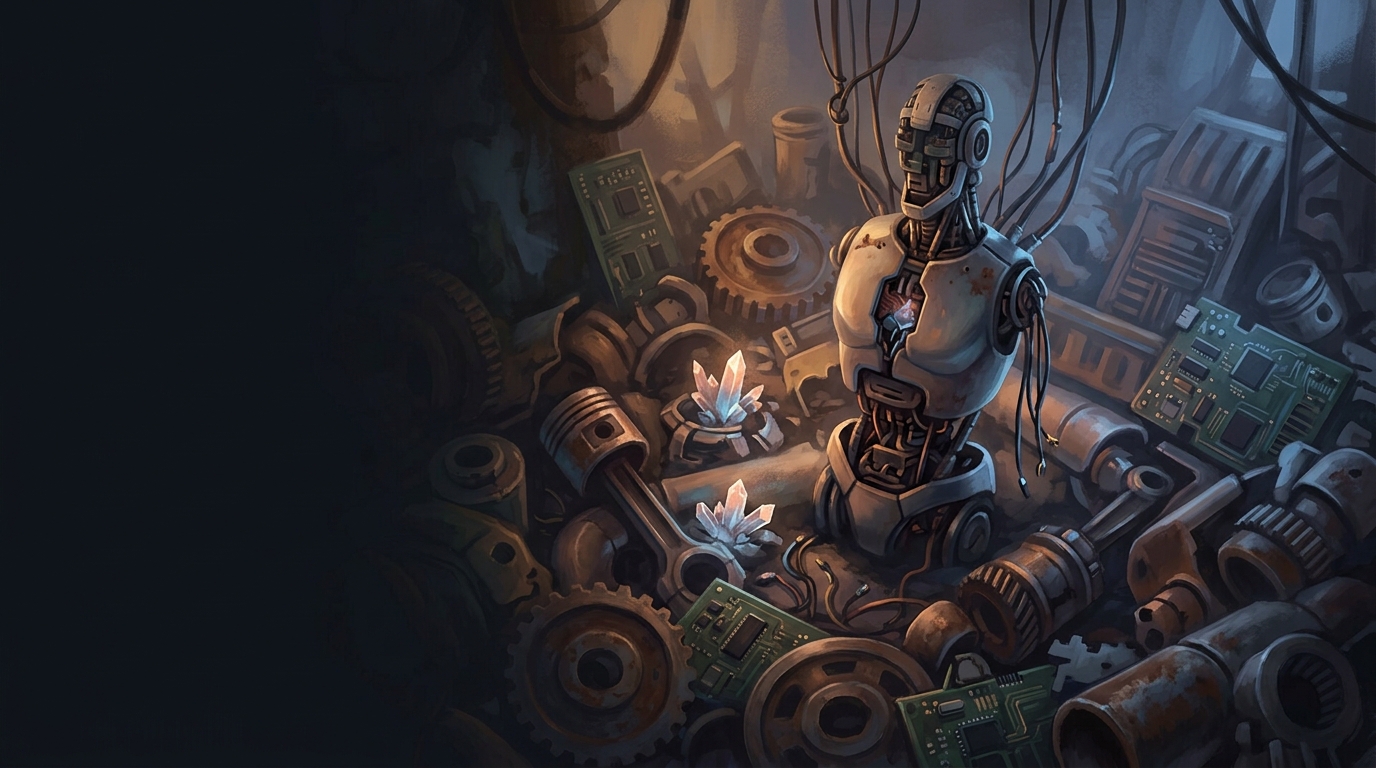
Watch R.E.A.C.H. hover over a defunct unit’s neural cortex. The cursor trembles. Not from processing lag, but from something approaching recognition. When you finally extract that memory module, the protagonist doesn’t catalogue it as “salvage item acquired.” Instead, they turn it over in their hands like a relic of themselves. The inventory screen lists it as “Fragment (Origin: Unknown),” but the weight system tells a different story—psychological mass measured in kilobytes of doubt.
The genius lies in how salvage becomes archaeology. Each component you harvest carries metadata—not just specs, but fragments of the previous owner’s final moments. Install a damaged optical sensor and your vision flickers with someone else’s last glimpse of daylight. Swap in a corroded power cell and feel the phantom drain of another android’s dying battery. The game’s modular upgrade system transforms into involuntary archaeology, forcing you to question which thoughts are originally yours.
Most cyberpunk titles treat body modification as power fantasy. REPLACED turns it into a horror of recognition. When you realize the salvaged neural pathways integrate seamlessly with your existing consciousness, the real question surfaces: were you ever the original, or just another salvaged assembly pretending at continuity?
The machine doesn’t learn to question its parts—it discovers it was always nothing but questioned parts, questioning themselves.